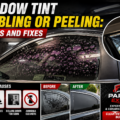
Window Tint Bubbling or Peeling: Causes and Fixes
Automotive window tinting is one of the most effective upgrades you can make for your vehicle. It elevates privacy, blocks blinding glare, shields interior leather and plastics from UV degradation, and reduces cabin heat.
However, few things ruin a vehicle’s appearance faster than window film that has started to bubble, blister, peel, or turn purple.
Not only does bubbling and peeling tint look unsightly, but it also compromises driver visibility, distorts rear-view mirror vision, and renders the window film completely useless at rejecting heat or UV rays.
If your car windows have developed unsightly air bubbles or peeling edges, you are likely wondering what caused the failure, whether it can be repaired, and how to fix it properly.
This comprehensive guide breaks down the core causes of window tint bubbling and peeling, clarifies the difference between normal post-install moisture versus permanent adhesive failure, outlines why DIY fixes fail, and explains how authorized protection centers like Paprala Express strip damaged film safely to restore pristine optical clarity.
At a Glance: Window Tint Issues Matrix
┌───────────────────────────────────────────────────────────────────────────┐
│                    WINDOW TINT FAILURE DIAGNOSIS                          │
├───────────────────────────┬───────────────────┬───────────────────────────┤
│ Symptom                   │ Root Cause        │ Corrective Action         │
├───────────────────────────┼───────────────────┼───────────────────────────┤
│ Small, watery blisters    │ Normal moisture   │ WAIT: Do not touch.       │
│ (First 3 to 14 days)      │ curing phase      │ Evaporates in sunlight.   │
├───────────────────────────┼───────────────────┼───────────────────────────┤
│ Large "purple" bubbles /  │ Adhesive breakdown│ UNREPAIRABLE:             │
│ Blistering grid           │ due to UV/heat    │ Complete removal required.│
├───────────────────────────┼───────────────────┼───────────────────────────┤
│ Peeling edges along       │ Poor prep /       │ UNREPAIRABLE:             │
│ top or bottom seals       │ Dirt contamination│ Must be stripped&re-tinted│
├───────────────────────────┼───────────────────┼───────────────────────────┤
│ Hazy, milky pockets       │ Inferior dyed film│ Replace with high-grade   │
│ with foul odor            │ adhesive gassing  │ Nano-Ceramic film.        │
└───────────────────────────┴───────────────────┴───────────────────────────┘
Curing Moisture vs. Permanent Failure: Know the Difference
Before assuming your new window tint job has failed, it is vital to distinguish between normal post-installation curing bubbles and permanent adhesive failure.
                   POST-INSTALL MOISTURE vs. ADHESIVE FAILURE
─────────────────────────────────────────────────────────────────────
CURING BLISTERS (Normal)   : Small, watery pockets of trapped slip solution.
                             Appears in the first 24–72 hours post-install.
                             Disappears completely as moisture evaporates.

ADHESIVE FAILURE (Defect)   : Large, dry, or purple web-like air bubbles.
                             Appears months or years after installation.
                             Expands over time and distorts vision completely.
─────────────────────────────────────────────────────────────────────
During installation, technicians spray a liquid slip solution to slide the film into place. While heavy squeegees extract 95% of this water, a microscopic layer remains trapped between the adhesive and glass.
Over the first 3 to 14 days (depending on weather and ambient sunlight), this water gathers into small, hazy water pockets. This is completely normal. As the glass warms in the sun, the water vaporizes through the breathable film layer. Never press, pop, or squeeze curing water bubbles, as doing so will tear the wet film or create permanent air pockets.
Top Causes of Window Tint Bubbling
If your window tint is months or years old and suddenly develops a “grid” of small air bubbles, it has suffered permanent material breakdown. Here are the primary culprits behind bubbling tint:
┌───────────────────────────────────────────────────────────────────────────┐
│                    PRIMARY CAUSES OF TINT BUBBLING                        │
├───────────────────┬───────────────────────────────────────────────────────┤
│ Failure Cause     │ Mechanism of Action                                   │
├───────────────────┼───────────────────────────────────────────────────────┤
│ 1. Low-Quality    │ Cheap dyed films use unstable glue that breaks down   │
│    Dyed Films     │ and off-gasses when exposed to intense UV rays.       │
├───────────────────┼───────────────────────────────────────────────────────┤
│ 2. Inadequate     │ Dust particles, oils, or old glue left on glass prevent│
│    Glass Prep     │ the adhesive layer from forming a uniform bond.       │
├───────────────────┼───────────────────────────────────────────────────────┤
│ 3. Extreme Heat & │ Constant thermal stress degrades low-tier adhesives,  │
│    UV Radiation   │ causing the film to separate from the glass pane.     │
├───────────────────┼───────────────────────────────────────────────────────┤
│ 4. Improper Post- │ Rolling down windows before the 3-to-5-day cure window│
│    Install Care   │ catches soft bottom edges on door felts.              │
└───────────────────┴───────────────────────────────────────────────────────┘
1. Low-Quality Dyed Films and Inferior Glues
The single most common cause of bubbling is cheap, entry-level dyed window film. Budget tint films rely on non-colorfast dyes suspended in low-grade mounting adhesives. Under constant UV exposure, the chemical bonds inside the adhesive break down and decompose, releasing gases trapped between the glass and the film. This off-gassing creates the classic “purple bubble grid” seen on older cars.
2. Poor Surface Preparation During Installation
Window tint requires a surgically clean surface to adhere properly. If an installer fails to thoroughly decontaminate the glass—leaving behind micro-dust particles, finger oils, or leftover glue from a previous tint job—air pockets will form around those contamination specks. Over time, heat expansion forces those tiny pockets to enlarge into visible bubbles.
3. Aging and Natural Thermal Breakdown
Even mid-tier window films have a finite lifespan. Years of baking under intense summer heat causes lower-grade adhesives to dry out, lose elasticity, and detach from the glass surface.
Top Causes of Window Tint Peeling
While bubbling usually points to chemical adhesive failure in the middle of the pane, peeling typically originates along the edges or corners of a window.
                  COMMON PEELING TRIGGER POINTS
─────────────────────────────────────────────────────────────────────
TOP EDGE LIFTING  : Caused by film cut flush without proper edge gap,
                    rubbing against top window channels during roll-up.

BOTTOM CORNER PEEL: Caused by rolling windows down before full cure,
                    catching the soft film edge on lower door felts.

AMMONIA CLEANERS  : Using ammonia-based glass cleaners (Windex) dissolves
                    the mounting glue along exposed outer window borders.
─────────────────────────────────────────────────────────────────────
1. Premature Window Operation
The leading cause of edge peeling is rolling down the car windows before the adhesive has fully cured. When you roll a window down, the bottom edge slides past tight weather-stripping felt gaskets. If the adhesive is still soft and wet, the friction catches the bottom edge, pulling the film back and causing immediate peeling.
2. Incorrect Film Edge Fitment and Trimming
If an installer cuts the film too close to the top curved edge of the glass—or leaves overhang past the bevel—the film rubs against the top rubber weather channel every time the door shuts or the window rolls up. Over time, this constant mechanical friction forces the edge to lift.
3. Cleaning with Ammonia-Based Solvents
Using standard household glass cleaners containing ammonia is disastrous for window tint. Ammonia acts as a solvent that slowly eats through polyester films and dissolves acrylic mounting glues. Cleaning tinted glass with ammonia causes the borders to turn white, lose adhesion, and peel away from the frame.
Can Bubbled or Peeled Tint Be Fixed? (The Truth)
When vehicle owners spot bubbling or peeling, they often ask if a technician can simply “pop the bubbles with a needle” or “glue the peeled edge back down.”
The short answer is NO.
┌───────────────────────────────────────────────────────────────────────────┐
│                     MYTH vs. REALITY: TINT REPAIRS                        │
├───────────────────────────────────┬───────────────────────────────────────┤
│ The DIY Myth                      │ The Technical Reality                 │
├───────────────────────────────────┼───────────────────────────────────────┤
│ "Pop the bubbles with a pin and   │ Fails because the underlying glue     │
│ smooth it out with a card."       │ has completely oxidized and died.     │
├───────────────────────────────────┼───────────────────────────────────────┤
│ "Glue the peeling corner back     │ Traps dirt and leaves unsightly cloudy│
│ down with superglue or water."    │ patches; ruins optical clarity.       │
├───────────────────────────────────┼───────────────────────────────────────┤
│ "Heat it with a hairdryer to      │ Shrinks and warps the polyester film; │
│ melt the glue back onto glass."   │ makes the distortion much worse.      │
└───────────────────────────────────┴───────────────────────────────────────┘
Once a window film has begun to bubble or peel due to adhesive failure, the chemical bond is permanently destroyed. Puncturing a bubble simply leaves holes in a stretched film that gathers dirt.
The only correct, lasting fix for bubbling or peeling window tint is to completely strip off the damaged film, thoroughly dissolve and scrape away the old adhesive, and install a fresh, high-grade window film.
The Hazards of DIY Tint Removal
While removing old tint might seem like an easy weekend project, attempting to peel off degraded tint yourself carries significant risks to your vehicle’s interior.
                 THE RISKS OF IMPROPER TINT STRIPPING
─────────────────────────────────────────────────────────────────────
[1] SEVERED DEFROSTER LINES  : Scraping rear glass with a razor blade breaks
                               delicate copper heating grid lines permanently.
[2] FOUL CHEMICAL ODOR       : Decomposing glue releases toxic, skunk-like
                               chemical odors that absorb into interior trim.
[3] GOUGED DOOR TRIMS        : Slipping scrapers can scratch interior leather,
                               door plastics, and rubber window seals.
─────────────────────────────────────────────────────────────────────
The Rear Windshield Threat
The rear glass of most vehicles contains delicate, surface-mounted copper wires for the rear defroster grid and radio antenna. Using razor blades or harsh tools to scrape off old glue on the rear window will strip those copper lines right off the glass, requiring a complete, expensive rear windshield replacement to restore rear defrost functionality.
The Professional Fix: How Paprala Express Restores Your Windows
If you are dealing with a botched, bubbling, or peeling tint job from a previous shop or DIY attempt, turning to experienced protection specialists is the safest way to restore your vehicle’s glass.
Paprala Express delivers specialized tint removal and re-installation services designed to eliminate degraded film safely without damaging your vehicle’s sensitive electronics or rear defroster grids.
                 THE PAPRALA EXPRESS STRIPPING & RE-TINT CODE
─────────────────────────────────────────────────────────────────────
[1] STEAM EXTRACTION SYSTEM : High-temperature vapor steam softens hardened
                              adhesive, allowing film to peel cleanly in one sheet.
[2] CHEMICAL DE-GLUING      : Ammonia-free solvent treatments dissolve stubborn
                              glue residue without abrasive metal scraping.
[3] DEFROSTER SAFE          : Specialized non-metallic scrub pads preserve 100%
                              of rear defroster grid lines.
[4] DIGITAL PRECISION RE-TINT: Precision computer-cut nano-ceramic film patterns
                              installed in climate-controlled clean bays.
─────────────────────────────────────────────────────────────────────
Why Drivers Turn to Paprala Express to Fix Bad Tint Jobs:
1. Safe Defroster-Preserving Removal
Paprala Express uses commercial-grade vapor steamers to heat the outer surface of the glass precisely. This softens the petrified glue, allowing the old, bubbled film to peel off cleanly in a single sheet without risking damage to delicate rear defroster elements.
2. Advanced Nano-Ceramic Upgrades
Instead of replacing old film with cheap dyed tint that will bubble again in two years, Paprala Express installs premium nano-ceramic window films. Formulated with non-conductive ceramic particles, these films provide extreme heat rejection, block 99% of UV rays, will never turn purple, and are backed by multi-year warranties against bubbling, peeling, or fading.
3. Precision Computer-Plotted Patterns
To prevent edge peeling, Paprala Express uses digital plotters to cut window patterns tailored specifically to your vehicle’s make and model. This guarantees precise edge margins that tuck smoothly behind door seals without catching or lifting over time.
How to Prevent Future Window Tint Bubbling & Peeling
Once you have installed fresh, professional window tint, follow these simple care guidelines to ensure it stays crystal clear for the life of your vehicle:
               PREVENTIVE CARE CHECKLIST
─────────────────────────────────────────────────────────────────────
[ ] Leave windows rolled up for 3 to 5 days after installation.
[ ] Clean glass using ammonia-free cleaners only (e.g., tint-safe formulas).
[ ] Use plush, clean microfiber towels instead of paper towels or rough cloths.
[ ] Park in shaded areas or garages during extreme heat waves when possible.
[ ] Choose high-grade Ceramic or Carbon films backed by manufacturer warranties.
─────────────────────────────────────────────────────────────────────
Summary: Upgrade Your Glass with Confidence
Bubbling and peeling window tint ruins your vehicle’s curb appeal, impairs nighttime visibility, and indicates complete material failure. While DIY fixes are ineffective and risk damaging rear defroster grids, a professional removal and re-installation completely restores your car’s look and functionality.
By choosing non-fading, high-performance nano-ceramic films installed by certified specialists like Paprala Express, you get flawless optical clarity, maximum solar heat rejection, and a sleek finish backed by comprehensive warranty protection against future bubbling or peeling.
Ready to replace your unsightly bubbled tint with high-performance ceramic protection? Contact the team at Paprala Express today to book your window tint consultation!