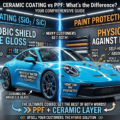
Ceramic Coating vs PPF: What’s the Difference?
When it comes to protecting your vehicle’s exterior, two names dominate the automotive detailing industry: Ceramic Coating and Paint Protection Film (PPF).
While both options safeguard your car’s finish and maintain that showroom shine, they serve entirely different purposes. A common misconception among car owners is that choosing between Ceramic Coating and PPF is an “either/or” decision. In reality, understanding how each technology works—and how they complement each other—is key to making the best investment for your vehicle.
This comprehensive guide breaks down the core differences, pros and cons, cost comparisons, and why combining both solutions delivers the ultimate paint protection package.
What Is Paint Protection Film (PPF)?
Paint Protection Film (PPF), often referred to as a “clear bra,” is a thick, highly durable thermoplastic polyurethane film applied directly over your vehicle’s painted surfaces.
Originally developed for military use to protect helicopter rotor blades from shrapnel and debris, modern PPF is virtually invisible, optically clear, and engineered to absorb severe kinetic impacts.
┌─────────────────────────────────────────────────────────────────────────┐
│                     KEY HIGHLIGHTS OF PPF                              │
├─────────────────────────────────────────────────────────────────────────┤
│ • Physical Armor: Absorbs impact from rock chips, gravel, & debris.     │
│ • Self-Healing: Micro-scratches disappear with heat exposure.           │
│ • Thickness: Typically 6 to 8 mils thick (heavy-duty protection).       │
│ • Ideal For: High-impact areas (front bumper, hood, fenders, mirrors).  │
└─────────────────────────────────────────────────────────────────────────┘
Primary Benefits of PPF
-
Rock Chip & Impact Defense: PPF is the only product on the market that physically stops rock chips, flying road debris, and deep scratches from reaching your factory paint.
-
Self-Healing Properties: Premium films feature an elastomeric polymer top layer. When exposed to heat (sunlight, warm water, or a heat gun), light swirl marks and scratches self-heal automatically.
-
Chemical & Stain Resistance: Protects against harsh acid rain, bug splatter, tree sap, and road salt.
What Is Ceramic Coating?
Ceramic Coating is a liquid polymer infused with silicon dioxide ($\text{SiO}_2$) or silicon carbide ($\text{SiC}$). When applied to your vehicle’s exterior, it chemically bonds with the factory clear coat, creating a semi-permanent hydrophobic barrier.
Unlike PPF, Ceramic Coating is not a thick physical film; it is a micro-thin liquid layer that hardens to enhance surface gloss, slickness, and chemical resistance.
┌─────────────────────────────────────────────────────────────────────────┐
│                 KEY HIGHLIGHTS OF CERAMIC COATING                       │
├─────────────────────────────────────────────────────────────────────────┤
│ • Hydrophobic Properties: Water, dirt, & grime roll off effortlessly.   │
│ • Extreme Gloss & Depth: Delivers a mirror-like, wet look.               │
│ • Chemical Shield: Prevents oxidation, UV fading, & chemical etching.   │
│ • Ideal For: Full vehicle coverage (paint, glass, wheels, trim).        │
└─────────────────────────────────────────────────────────────────────────┘
Primary Benefits of Ceramic Coating
-
Hydrophobic Water Beading: Water, mud, and road grime slide off easily, making hand washes faster and reducing water spotting.
-
Unmatched Depth & Shine: Enhances paint color depth, giving your car a high-gloss finish.
-
UV & Oxidation Protection: Shields clear coat from sun degradation, preventing fading and clear coat failure over time.
-
Long-Lasting Self-Cleaning Effect: Keeps your car cleaner for longer between routine maintenance washes.
Ceramic Coating vs. PPF: Feature Comparison
To see how these two protective solutions compare side-by-side, check the detailed breakdown below:
| Feature | Paint Protection Film (PPF) | Ceramic Coating |
| Primary Function | Physical protection against rock chips | Surface slickness, gloss, & self-cleaning |
| Material Type | Thermoplastic polyurethane film | Liquid silicon dioxide ($\text{SiO}_2$) polymer |
| Rock Chip Defense | Excellent: Absorbs physical impacts | None: Too thin to stop flying stones |
| Scratch Resistance | High: Features self-healing capabilities | Moderate: Prevents minor wash swirls only |
| Hydrophobic Effect | Moderate to Good (varies by brand) | Exceptional: Extreme water & dirt repellency |
| Gloss Level | High (Clear finish) | Extreme: Deep, mirror-like reflectivity |
| Expected Lifespan | 7 to 10 Years | 2 to 7 Years (depends on grade) |
| Maintenance | Regular hand washing | Ultra-easy hand washing |
What Ceramic Coating CANNOT Do (And Vice Versa)
Understanding the limitations of each product prevents buyer’s remorse:
-
Ceramic Coating will NOT stop rock chips: Because coating is measured in nanometers (microscopic thickness), a flying rock will pass straight through it and chip your paint.
-
PPF will NOT keep your car clean by itself: While PPF protects against physical damage, bare film does not possess the extreme hydrophobic qualities of a ceramic coating. Dirt and road film can still adhere to bare PPF.
The Ultimate Combo: Why Getting Both Is the Best Option
If you want complete, uncompromising protection for your car, combining PPF and Ceramic Coating is the industry gold standard.
Here is how the hybrid approach works:
-
Apply PPF First: Install Paint Protection Film on high-impact zones (the full front bumper, hood, side mirrors, and front fenders) to block rock chips and gravel damage.
-
Apply Ceramic Coating Over the Entire Vehicle: Coat the entire vehicle—including over the installed PPF, unprotected rear panels, wheels, and glass.
Benefits of the Dual Protection Package:
-
360-Degree Shield: Your front end gets physical impact resistance, while the rest of your body panels enjoy UV and chemical defense.
-
Easier Film Maintenance: Applying Ceramic Coating over PPF prevents the film from staining, yellowing, or accumulating road contamination.
-
Seamless Aesthetics: The ceramic layer standardizes the gloss level across both wrapped and unwrapped panels, giving your vehicle a unified finish.
Final Thoughts
The decision between Ceramic Coating and PPF comes down to your driving habits and protection goals. If your priority is stopping rock chips on highway commutes, PPF is essential. If you want effortless maintenance, deep gloss, and chemical protection, Ceramic Coating is the way to go.
For car enthusiasts looking to preserve their vehicle’s value and appearance long-term, layering Ceramic Coating over Paint Protection Film offers the ultimate defense against the elements.