PPF vs Ceramic Coating: Which One Do You Need?
When it comes to protecting your car’s exterior, two names dominate the industry: Paint Protection Film (PPF) and Ceramic Coating. While both preserve your vehicle’s finish, they serve completely different purposes.
If you are torn between impact protection and hydrophobic shine, this guide breaks down costs, durability, key differences, and why combining both offers the ultimate defense for your car.
Direct Comparison Matrix
| Feature | Paint Protection Film (PPF) | Ceramic Coating |
| Primary Function | Physical impact protection | Chemical & hydrophobic protection |
| Rock Chip Defense | Yes (Thick polyurethane layer) | No (Too thin to stop stones) |
| Self-Healing | Yes (Minor scratches heal with heat) | No |
| Gloss & Hydrophobicity | Good (Varies by film quality) | Exceptional (Extreme slickness & mirror gloss) |
| Average Cost | $1,500 – $5,000+ | $700 – $2,000 |
| Lifespan | 7 to 10+ years | 2 to 7 years |
| Ease of Washing | Moderate | Extremely Easy (Water & mud slide off) |
1. What Is Paint Protection Film (PPF)?
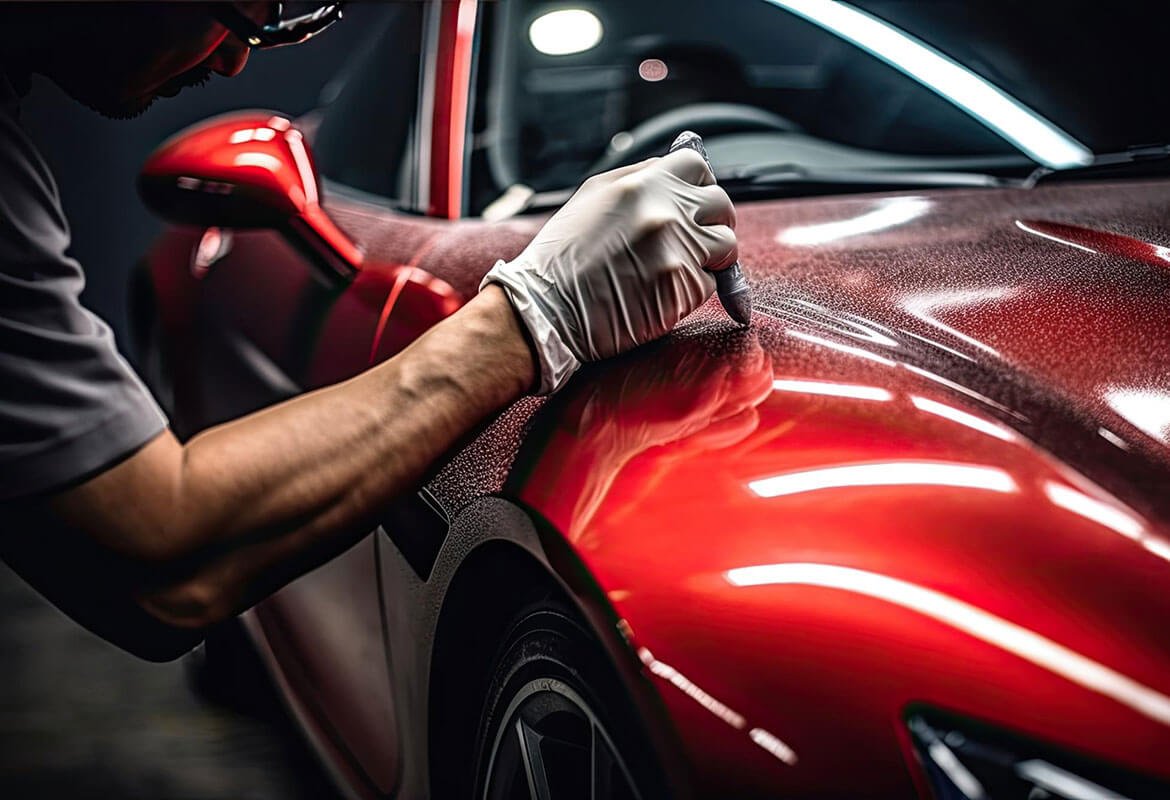
Paint Protection Film (often called clear bra) is a thick, transparent polyurethane layer applied directly to high-impact areas of your vehicle—or the entire body.
- Physical Shield: PPF absorbs the kinetic energy of flying gravel, road debris, and salt, preventing stone chips, scratches, and door dings.
- Self-Healing Technology: Advanced PPF coatings possess self-healing properties. Minor swirl marks or light scratches disappear under warm sun or hot water.
- Coverage Options:
- Partial Front: Bumper, partial hood, and mirrors.
- Full Front: Bumper, full hood, fenders, and mirrors (Most popular).
- Full Vehicle: Every painted panel protected.
2. What Is Ceramic Coating?
A ceramic coating is a liquid polymer infused with silicon dioxide ($SiO_2$) that chemically bonds to your vehicle’s factory clear coat. Rather than acting as a thick physical barrier, it forms an invisible, ultra-hard protective layer.
- Hydrophobic Properties: Water, mud, bird droppings, and tree sap bead up and slide off effortlessly, making hand-washing fast and simple.
- UV & Chemical Defense: Prevents clear coat oxidation, fading from high-altitude sun, and etching from acid rain or road salt.
- Mirror Gloss: Enhances color depth and reflective clarity far beyond standard waxes or sealants.
3. Key Differences: Physical vs. Chemical Defense
Understanding what each product can and cannot do prevents expensive mistakes:
┌────────────────────────────────────────────────────────────────────────┐
│                        THE CORE DIFFERENCE                             │
├────────────────────────────────────────────────────────────────────────┤
│ PPF = IMPACT DEFENSE (Stops gravel, rock chips, scratches & abrasion)  │
│ CERAMIC = SURFACE DEFENSE (Stops UV rays, salt corrosion & grime)       │
└────────────────────────────────────────────────────────────────────────┘
-
PPF stops rock chips; Ceramic Coating does not. A liquid coating is only a few microns thick—it cannot absorb heavy debris impacts.
- Ceramic Coating makes washing easier; PPF requires standard car washes. PPF is clear protective armor, but ceramic coating delivers super-hydrophobic slickness.
4. Why the Ultimate Solution Is the “PPF + Ceramic” Combo Package
If you want comprehensive protection without compromising on shine, you don’t actually have to choose one over the other. The gold standard in vehicle care is applying Ceramic Coating directly on top of Paint Protection Film.
                   THE ULTIMATE DUAL-LAYER SHIELD
───────────────────────────────────────────────────────────────────
TOP LAYER    : Ceramic Coating ──> Hydrophobic Slickness & UV Defense
BOTTOM LAYER : PPF             ──> Physical Armor & Rock Chip Absorber
BASE LAYER   : Factory Paint   ──> Pristine & Preserved
───────────────────────────────────────────────────────────────────
Benefits of the Combo Package:
- Total Defense: You get physical rock-chip resistance on high-impact zones, plus hydrophobic chemical resistance over the entire body.
- Easier Film Maintenance: PPF alone can accumulate road grime over time. Topping PPF with a ceramic layer prevents contaminants from bonding to the film, extending its lifespan.
- Uniform Gloss: Applying ceramic coating over both wrapped and unwrapped panels ensures a consistent, liquid-like shine across the entire vehicle.
Which One Should You Choose?
Choose PPF if:
- You drive frequently on highways or gravel-heavy roads.
- You bought a new or freshly painted vehicle and want to prevent rock chips.
- You want long-term physical defense for 7–10 years.
Choose Ceramic Coating if:
- You want maximum gloss and effortless wash maintenance.
- You store your car indoors or drive mostly in smooth city conditions.
- You want long-lasting protection against UV rays, acid rain, and road salt on a tighter budget.
Choose the Combo Package if:
- You want zero compromises—maximum rock-chip defense where it counts (Full Front PPF) combined with total-vehicle ceramic gloss and slickness.